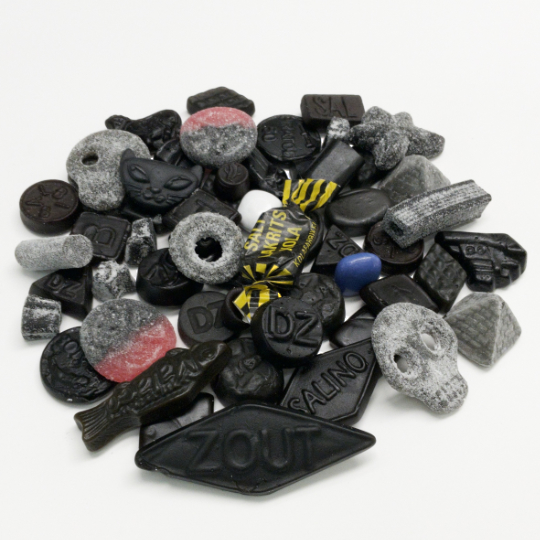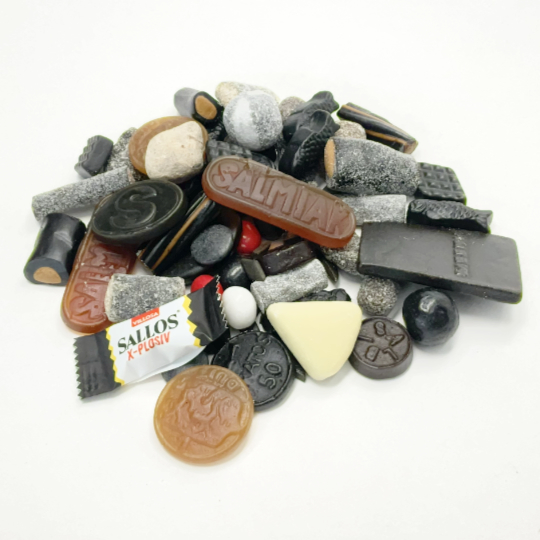
Salmiak (ammonium chloride) is a rock salt. It is industrially produced for the food industry, a white sour-salty tasting fine granulate. A maximum of 7.99 percent salt is permitted in the recipe, this must be labelled as "Extra strong adult liquorice - not children's liquorice".Salt [---6a69418c44e18---[Liquorice]---6a69418c44e18---]...
...is created when harsh sea air gives [---6a69418c44e18---[Liquorice]---6a69418c44e18---] a spicy [---6a69418c44e18---[aroma]---6a69418c44e18---].
The addition of salt to [---6a69418c44e18---[Liquorice]---6a69418c44e18---] was probably invented by coastal dwellers. Salt [---6a69418c44e18---[Liquorice]---6a69418c44e18---] is a speciality in its own right in the world of [---6a69418c44e18---[Liquorice]---6a69418c44e18---]. The Netherlands and Scandinavia dominate this category with a wide variety of combinations of salt and salmiak. In Holland alone, there are nine different types of ‘dubbel zoute’, or double-salted [---6a69418c44e18---[Liquorice]---6a69418c44e18---]. In Scandinavia, [---6a69418c44e18---[Liquorice]---6a69418c44e18---] with ‘salmiakki’, salmiak salt, is very popular.
How does salt get into [---6a69418c44e18---[Liquorice]---6a69418c44e18---]?
Salt [---6a69418c44e18---[Liquorice]---6a69418c44e18---] is created when salt is added to [---6a69418c44e18---[Liquorice]---6a69418c44e18---] as a flavouring. This is because [---6a69418c44e18---[Liquorice]---6a69418c44e18---] recipes are cooked. The [---6a69418c44e18---[Liquorice]---6a69418c44e18---] plant is the basis of [---6a69418c44e18---[Liquorice]---6a69418c44e18---]. [---6a69418c44e18---[Liquorice]---6a69418c44e18---] is naturally vegan. Whether it remains so depends on the other ingredients used in the processing. First, the base mixture is cooked, then seasoned. Whether [---6a69418c44e18---[Liquorice]---6a69418c44e18---] tastes sweet or salty depends on the flavouring ingredients. Salt [---6a69418c44e18---[Liquorice]---6a69418c44e18---] packs a punch and remains black in appearance, or it is sprinkled with salt and develops a salt crust.
What types of salt are there?
Salt [---6a69418c44e18---[Liquorice]---6a69418c44e18---] is made by adding sea salt, table salt (sodium chloride) or sal ammoniac ([---6a69418c44e18---[Ammonium chloride]---6a69418c44e18---]). A maximum of 7.99% salt is permitted in the recipe.
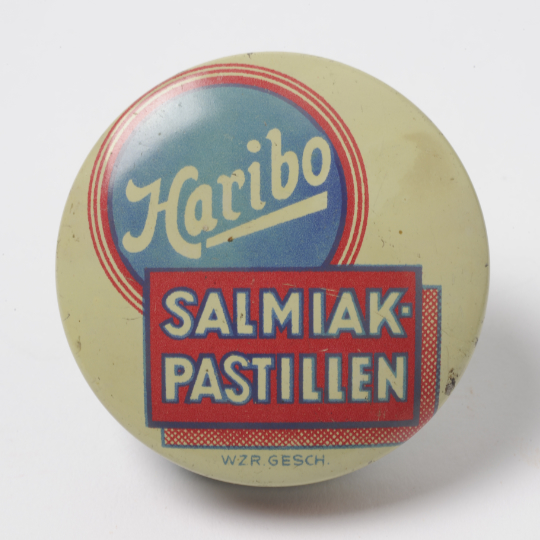
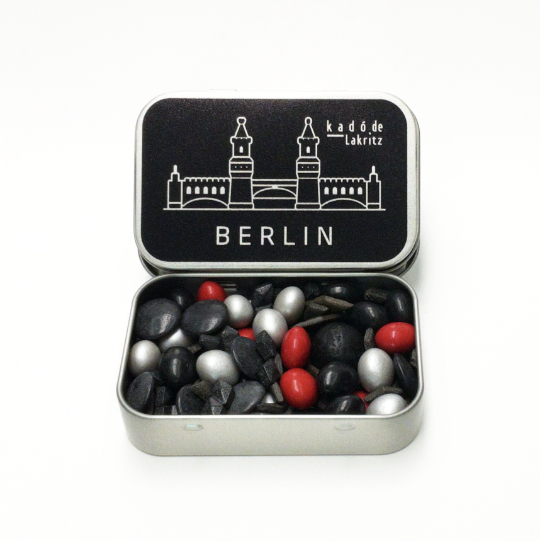
Sal ammoniac pastilles were handmade in every pharmacy according to their own recipe. They are [---6a69418c44e18---[Liquorice]---6a69418c44e18---] pastilles flavoured with sal ammoniac. Here, [---6a69418c44e18---[Liquorice]---6a69418c44e18---] and sal ammoniac complement each other in their disinfecting properties and are beneficial for coughs and hoarseness. They are usually sold in attractive tins and boxes. They have always been popular companions.
Where is salt [---6a69418c44e18---[Liquorice]---6a69418c44e18---] popular? And why?
[---6a69418c44e18---[Liquorice]---6a69418c44e18---], especially salt [---6a69418c44e18---[Liquorice]---6a69418c44e18---], is very popular in the Nordic countries of Finland, Sweden and Denmark. There you can find salmiak ice cream, salmiak schnapps, smoky salt [---6a69418c44e18---[Liquorice]---6a69418c44e18---] and salmiak chocolate. We can only guess why the savoury, sour and salty taste is so ‘normal’ there. My theory is that Scandinavians were accustomed to the taste of salt due to the preservation of food.
The Dutch also love [---6a69418c44e18---[Liquorice]---6a69418c44e18---], especially salted [---6a69418c44e18---[Liquorice]---6a69418c44e18---], and have many different [---6a69418c44e18---[Liquorice]---6a69418c44e18---] companies in the country, each offering their own brands of salted [---6a69418c44e18---[Liquorice]---6a69418c44e18---].
In northern Germany, salted [---6a69418c44e18---[Liquorice]---6a69418c44e18---] is also well known and appreciated.
The [---6a69418c44e18---[Liquorice equator]---6a69418c44e18---] marks the boundary of salt [---6a69418c44e18---[Liquorice]---6a69418c44e18---] preferences in Germany. Salt [---6a69418c44e18---[Liquorice]---6a69418c44e18---] is not popular in southern Germany or southern Europe.